Mid-Career Resume Mistakes That Cost You Opportunities
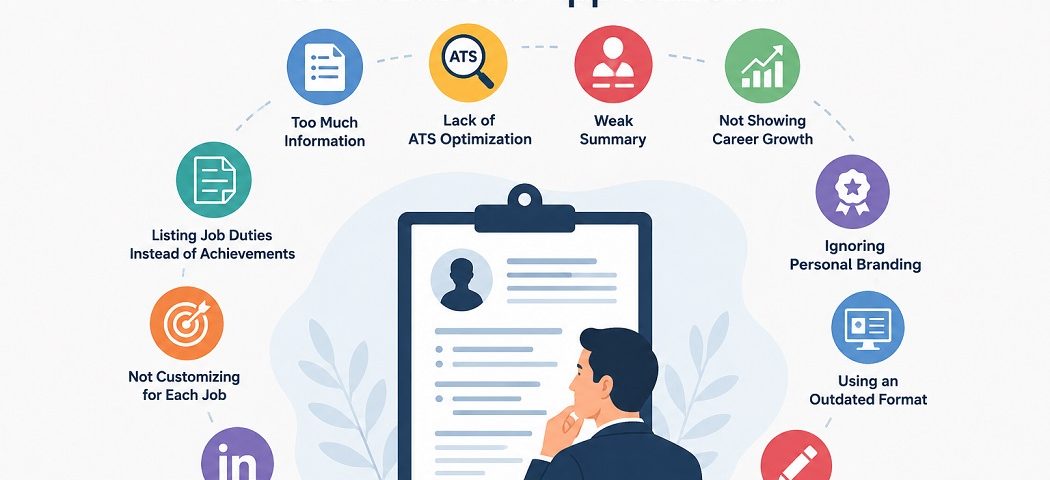
Reaching the mid-career stage is a significant milestone. You have years of experience, proven skills, and valuable achievements. However, many professionals at this level struggle to translate their experience into a resume that attracts recruiters. Surprisingly, mid-career resumes often get rejected not because of lack of experience, but because of how that experience is presented. Understanding and avoiding common resume mistakes can make a major difference in your job search success.
1. Treating Your Resume Like a Job Description
One of the biggest mistakes mid-career professionals make is listing responsibilities instead of achievements. Recruiters already know what a “Manager” or “Team Lead” does. What they want to see is how well you performed.
Instead of saying:
Managed a team of 10 people
Say:
Led a team of 10 and improved project delivery time by 25%
Focus on measurable results that demonstrate your impact.
2. Including Too Much Information
With years of experience, it’s tempting to include everything you’ve done. But long resumes (4–6 pages) can overwhelm recruiters. Mid-career resumes should ideally be 2 pages, highlighting only the most relevant and recent experience.
Avoid outdated roles or irrelevant early-career details unless they add value to the job you’re applying for.
3. Lack of ATS Optimization
Most companies in India use Applicant Tracking Systems (ATS) to filter resumes. If your resume is not optimized with relevant keywords, it may never reach a recruiter.
Common ATS mistakes include:
Missing industry-specific keywords
Using fancy graphics or tables
Incorrect formatting
Ensure your resume is clean, keyword-rich, and aligned with job descriptions.
4. Weak Professional Summary
Your summary is the first thing recruiters read. A vague or generic summary like “Experienced professional seeking growth opportunities” does not create impact.
Instead, craft a strong summary that includes:
Years of experience
Key skills
Industry expertise
Major achievements
This instantly positions you as a strong candidate.
5. Not Showcasing Career Progression
Mid-career professionals are expected to show growth. If your resume does not reflect promotions, increased responsibilities, or leadership roles, it can raise concerns.
Clearly highlight:
Promotions within the same company
Leadership roles
Expanded responsibilities
This shows career advancement and reliability.
6. Ignoring Personal Branding
At mid-career level, your resume is not just a document—it’s your personal brand. Many professionals fail to differentiate themselves.
Your resume should clearly answer:
What makes you unique?
What value do you bring?
Adding a strong headline, key skills section, and achievements can help build a powerful brand.
7. Using an Outdated Format
Resume trends evolve. Using an outdated format with dense paragraphs, old fonts, or poor structure can make your resume look unprofessional.
Use a modern format with:
Clear headings
Bullet points
Consistent formatting
Professional fonts
A clean layout improves readability and recruiter engagement.
8. Not Customizing for Each Job
Sending the same resume to every job is a common mistake. Each job has different requirements, and your resume should reflect that.
Tailor your resume by:
Matching keywords from the job description
Highlighting relevant experience
Adjusting your summary and skills
Customization significantly increases your chances of getting shortlisted.
9. Overlooking LinkedIn Integration
Recruiters often check LinkedIn profiles before shortlisting candidates. If your resume and LinkedIn profile are inconsistent, it can create doubt.
Ensure:
Your LinkedIn profile matches your resume
Your achievements are updated
Your profile is optimized with keywords
A strong online presence supports your resume.
10. Poor Grammar and Presentation
Even small grammar mistakes can create a negative impression. At mid-career level, recruiters expect professionalism and attention to detail.
Always:
Proofread your resume
Avoid spelling errors
Use clear, concise language
Consider professional resume writing services if needed.
Read more: Best Resume Builder in India – ProfessionalResumes.in
Conclusion
Mid-career professionals have a wealth of experience, but success depends on how effectively that experience is presented. Avoiding these common resume mistakes can significantly improve your chances of landing interviews. A well-structured, achievement-driven, and ATS-friendly resume can position you as a strong candidate in today’s competitive job market.