Career Change Resume: How to Reposition Your Skills
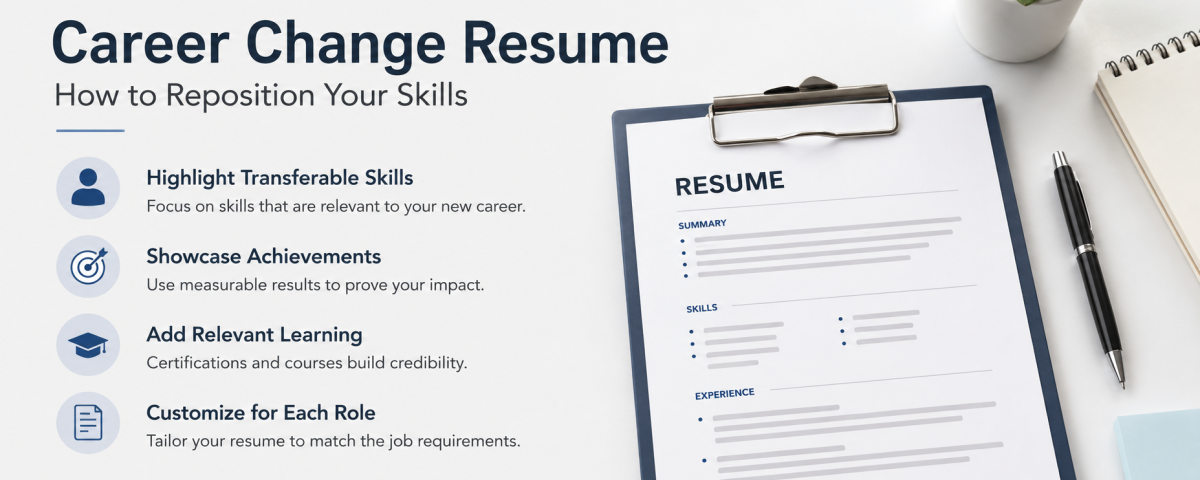
Changing careers can feel exciting, but it also comes with challenges—especially when it comes to your resume. Many professionals worry that recruiters may overlook them because their experience belongs to a different industry. The good news is that employers often value transferable skills, adaptability, and practical achievements more than industry labels. A well-crafted career change resume can help you present your experience in a way that matches your new career goals.
Instead of focusing only on past job titles, your resume should highlight the skills, accomplishments, and strengths that are relevant to your target role. Repositioning your skills effectively can help employers see your potential and increase your chances of getting interview calls.
Understand the Goal of a Career Change Resume
A traditional resume mainly focuses on career progression within the same field. However, a career change resume is different. Its purpose is to bridge the gap between your previous experience and your future role.
Recruiters should quickly understand:
- Why you are changing careers
- What relevant skills you already have
- How your past experience can benefit the new industry
- Why you are a strong fit despite limited direct experience
The key is to connect your previous work experience to the requirements of your new role.
Start with a Strong Resume Summary
Your professional summary is one of the most important sections in a career change resume. Instead of mentioning unrelated experience, focus on transferable skills and career goals.
For example:
Wrong Approach:
“Sales executive with 8 years of experience seeking a job in digital marketing.”
Better Approach:
“Results-driven professional with expertise in client communication, market analysis, and strategic planning, transitioning into digital marketing with strong analytical and customer engagement skills.”
This immediately shifts the focus toward relevant strengths instead of unrelated job titles.
Identify Your Transferable Skills
Transferable skills are abilities that can be applied across industries and job roles. These skills are extremely valuable in career transitions.
Some common transferable skills include:
- Leadership
- Communication
- Problem-solving
- Project management
- Team collaboration
- Customer service
- Data analysis
- Time management
- Sales and negotiation
- Technical proficiency
For example, a teacher moving into corporate training already has presentation, communication, and organizational skills. Similarly, a sales professional moving into marketing has customer understanding and strategic thinking abilities.
Carefully analyze the job description of your target role and identify which of your current skills align with it.
Focus on Achievements Instead of Responsibilities
One of the biggest mistakes job seekers make is listing only job duties. Employers are more interested in measurable results.
Instead of writing:
“Handled customer support”
Write:
“Resolved 95% of customer issues successfully while improving customer satisfaction ratings.”
Achievements show your impact and make your skills more credible.
Even if your previous industry is different, achievements demonstrate qualities like leadership, problem-solving, and efficiency—all of which are valuable across industries.
Use a Skills-Based Resume Format
For career changers, a functional or hybrid resume format often works better than a traditional chronological format.
Functional Resume
This format focuses more on skills and accomplishments than work history.
Hybrid Resume
This combines skills with work experience and is often the best choice for career changers.
A hybrid resume may include:
1. Professional Summary
2. Key Skills
3. Relevant Achievements
4. Work Experience
5. Education and Certifications
This structure helps recruiters notice your relevant abilities before focusing on your previous industry.
Add Relevant Certifications and Training
If you are entering a new field, certifications can help build credibility. Online learning platforms and industry certifications show employers that you are serious about the transition.
Examples include:
- Digital Marketing Certifications
- Data Analytics Courses
- HR Certifications
- Project Management Certifications
- Coding Bootcamps
- Graphic Design Training
Even short-term courses can strengthen your profile and demonstrate commitment to learning.
Customize Your Resume for Every Job
A generic resume rarely works during a career transition. Every role may require different skills and keywords.
Read the job description carefully and tailor your resume accordingly.
For example:
If the role emphasizes communication skills, highlight presentations, negotiations, or client handling experience.
If the role requires analytical skills, include reporting, research, or performance tracking achievements.
Customizing your resume also improves compatibility with Applicant Tracking Systems (ATS), which many companies use to filter resumes.
Highlight Relevant Projects and Freelance Work
If you have completed freelance work, internships, personal projects, or volunteer work related to your new career, include them on your resume.
For example:
A finance professional moving into data analytics can include dashboard projects.
A teacher moving into content writing can include blog writing samples.
A customer service executive moving into HR can mention employee coordination responsibilities.
Practical exposure helps employers feel more confident about your transition.
Use Industry Keywords
Many resumes get rejected because they lack relevant keywords. Recruiters and ATS software search for specific skills and terms.
Review job postings in your target industry and naturally include important keywords throughout your resume.
For example, if transitioning into digital marketing, keywords may include:
- SEO
- Content Marketing
- Social Media Strategy
- Campaign Management
- Google Analytics
However, avoid keyword stuffing. Use keywords naturally where they match your actual experience or training.
Address Career Change Positively
Do not apologize for changing careers. Instead, present it as a strategic decision driven by growth, passion, and skill alignment.
Employers appreciate candidates who are adaptable and motivated. Confidence in your resume language can make a big difference.
Focus on:
- Your willingness to learn
- Relevant strengths
- Transferable achievements
- New certifications and training
- Industry knowledge
A positive approach helps recruiters see potential instead of limitations.
Keep the Resume Clear and Professional
Your resume should be easy to read and professionally formatted.
Tips include:
- Use clean fonts and proper spacing
- Keep resume length between 1–2 pages
- Use bullet points for readability
- Avoid long paragraphs
- Highlight measurable achievements
- Use consistent formatting
A modern and ATS-friendly design improves your chances of getting shortlisted.
Read more: The Power of a LinkedIn Profile Makeover: Elevate Your Professional Presence
Final Thoughts
Changing careers is no longer uncommon in today’s fast-changing job market. Employers increasingly value adaptable professionals who can bring fresh perspectives and transferable skills to their organizations. The key to a successful career change resume is repositioning your experience in a way that aligns with your new career goals.
Instead of focusing on what you lack, highlight what you already bring to the table. Showcase transferable skills, measurable achievements, relevant certifications, and practical experience that connect your past work to your future opportunities.
A well-structured career change resume can help recruiters see your true potential and open doors to exciting new career opportunities.