AI-Generated Resumes Are Flooding Recruiters — Here’s How to Stand Out
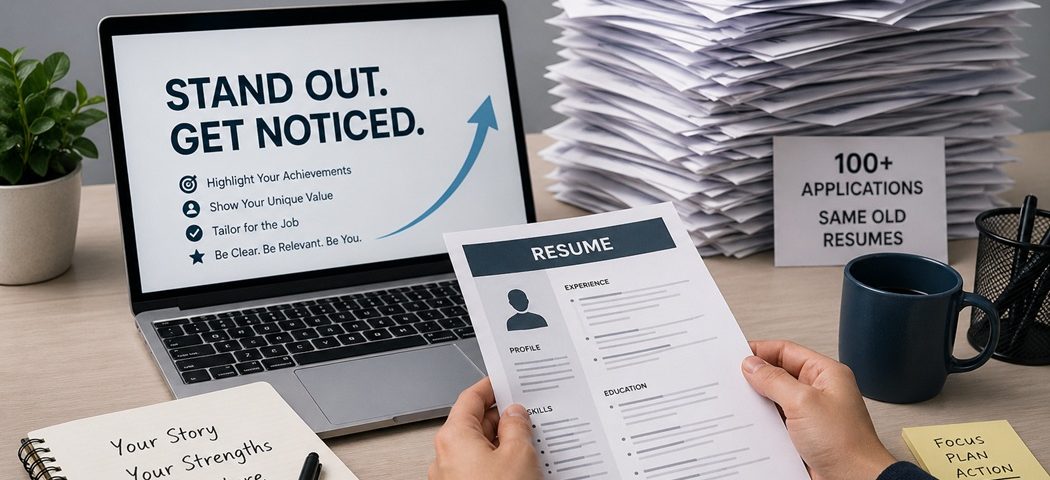
The rise of AI tools has completely changed how job seekers create resumes. What once took hours of careful writing can now be done in minutes. While this sounds like a huge advantage, it has quietly created a new problem: everyone’s resume is starting to look the same. Recruiters are now overwhelmed with polished, keyword-heavy, but often generic applications—and many strong candidates are getting lost in the crowd.
The Problem with AI-Written Resumes
AI tools are trained on existing resume formats and hiring trends. As a result, they tend to produce content that is safe, structured, and optimized for Applicant Tracking Systems (ATS). However, this also means:
- Repetitive language across resumes
- Overuse of buzzwords like “results-driven” or “team player”
- Lack of authentic voice or personality
- Generic achievements without real impact
When recruiters scan hundreds of resumes that sound nearly identical, it becomes difficult to identify candidates who truly stand out.
Why Standing Out Matters More Than Ever
Hiring managers don’t just look for qualifications—they look for clarity, relevance, and individuality. A resume is no longer just a document; it’s your personal pitch. If your resume blends in, your chances of getting shortlisted drop significantly, even if you’re qualified.
AI can help with structure, but it cannot fully replace your personal story, career journey, or unique strengths. That’s where most job seekers go wrong—they rely entirely on automation without adding a human touch.
How to Make Your Resume Stand Out
1. Add Specific Achievements, Not Just Responsibilities
Instead of listing what you were supposed to do, highlight what you actually accomplished. Use numbers and results.
Weak: Managed social media accounts
Strong: Increased social media engagement by 45% in 6 months
Specifics instantly make your profile more credible and memorable.
2. Customize for Every Job
One of the biggest mistakes is sending the same AI-generated resume to multiple companies. Tailor your resume based on the job description.
Focus on:
Relevant skills
Matching keywords (without overstuffing)
Industry-specific experience
Customization shows effort and alignment with the role.
3. Keep It Human
AI often removes personality from writing. Add a natural tone that reflects how you actually communicate.
Use simple, clear language
Avoid robotic phrases
Write like a professional, not a machine
Recruiters connect more with authenticity than perfection.
4. Highlight Your Unique Value
Ask yourself: What makes me different from others with similar experience?
It could be:
A niche skill
A unique project
Cross-industry experience
Leadership or problem-solving ability
Make sure this value is clearly visible in your resume.
5. Optimize for ATS—But Don’t Overdo It
Yes, keywords matter. But stuffing your resume with keywords can make it unreadable.
Balance is key:
Use relevant terms naturally
Maintain readability
Focus on clarity over quantity
Remember, your resume should pass both machines and humans.
6. Structure Matters
A clean and well-organized resume improves readability.
Use clear headings
Keep bullet points concise
Avoid clutter
Maintain consistent formatting
A well-structured resume ensures recruiters can quickly find what they need.
7. Don’t Skip a Strong Summary
Your professional summary is the first thing recruiters see. Make it impactful.
Instead of a generic introduction, include:
Your experience level
Key strengths
Career focus
A measurable achievement
This sets the tone for the rest of your resume.
The Role of AI: Assistant, Not Replacement
AI is a powerful tool—but it should assist, not replace, your thinking. The best resumes today are a combination of AI efficiency and human insight.
Use AI to:
Generate drafts
Improve grammar
Suggest structure
But always refine the content yourself. Your career is unique—your resume should be too.
Read more: Top 5 Resume Writers for Executive Class Senior Professionals
Final Thoughts
The job market is becoming more competitive, not just because of more applicants, but because of more similar applications. AI has leveled the playing field—but it has also made differentiation harder.
If you want to stand out, focus on what AI cannot replicate easily: your experiences, your results, and your individuality.
A resume that feels real, relevant, and results-driven will always outperform one that simply sounds perfect.
In a world full of automated resumes, being human is your biggest advantage.