Why 90% of Resumes Get Rejected by ATS – How to Fix Yours
In today’s highly competitive job market, creating a visually appealing resume is no longer enough to secure interviews. With hundreds or even thousands of candidates applying for a single position, companies have turned to technology to streamline the hiring process. This is where Applicant Tracking Systems (ATS) come into play.
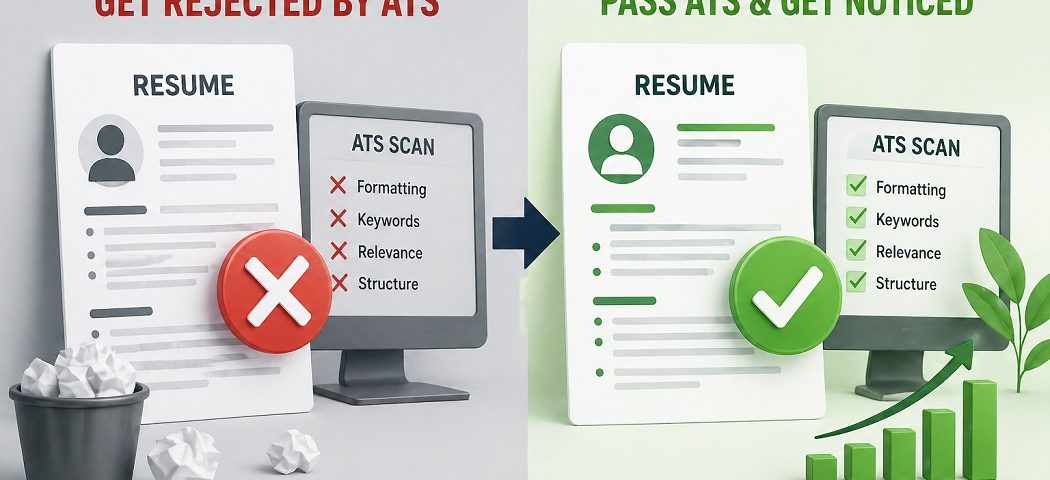
An ATS acts as the first gatekeeper in recruitment, scanning and filtering resumes before they ever reach a human recruiter. While this improves efficiency for employers, it creates a major challenge for job seekers. Studies and industry insights suggest that nearly 90% of resumes are rejected by ATS systems, not because candidates lack skills or experience, but because their resumes are not optimized for these systems.
If you’ve been applying for jobs but not receiving interview calls, your resume might be getting filtered out before it’s even seen. Understanding how ATS works—and how to optimize your resume accordingly—can significantly improve your chances of success.
What is an ATS and How Does It Work?
An Applicant Tracking System is a software tool used by employers to manage large volumes of job applications. Instead of manually reviewing every resume, recruiters rely on ATS to automate the initial screening process.
The system scans resumes and evaluates them based on several factors, including:
- Keyword relevance to the job description
- Resume structure and formatting
- Work experience and skills alignment
- Education and certifications
Each resume is then assigned a score or ranking. Only the highest-ranking applications are forwarded to hiring managers, while the rest are automatically rejected or stored in the database.
This means that even highly qualified candidates can be overlooked if their resumes are not ATS-friendly.
Top Reasons Why Resumes Get Rejected by ATS
Understanding the common mistakes that lead to rejection is the first step toward improving your resume. Below are the most frequent reasons why resumes fail ATS screening:
1. Poor Formatting: One of the biggest mistakes job seekers make is using overly creative or complex resume designs. While graphics, tables, columns, and icons may look attractive to humans, ATS systems often struggle to read them correctly.
As a result, important information such as your skills or experience may not be properly extracted, leading to a lower ranking or rejection.
2. Missing or Incorrect Keywords: Keywords are the backbone of ATS screening. These are specific words or phrases related to the job, such as required skills, tools, or qualifications.
If your resume does not include the right keywords—or uses different terminology—it may not match the job description. Even if you are qualified, the ATS may fail to recognize your suitability for the role.
3. Generic Resume Content: Using the same resume for every job application is a common but costly mistake. ATS systems are designed to look for relevance, so a generic resume that does not align with a specific job description is unlikely to rank well.
Customization is key. Each job requires a tailored approach that highlights the most relevant skills and experiences.
4. Incorrect File Format: While many job seekers prefer PDF resumes, not all ATS systems handle them effectively. Some systems are better optimized for Word documents (.docx), and using the wrong format can lead to parsing errors or incomplete data extraction.
Always follow the employer’s instructions regarding file format, and when in doubt, use a simple .docx file.
5. Lack of Clear Structure and Headings: ATS systems rely on standard section headings to organize and interpret information. If your resume uses unconventional titles or lacks clear structure, the system may struggle to identify key sections like work experience, education, or skills.
This can result in incomplete or inaccurate evaluation of your profile.
How to Fix Your Resume and Pass ATS Screening
The good news is that optimizing your resume for ATS is not complicated. By making a few strategic changes, you can significantly improve your chances of getting shortlisted.
1. Use a Simple and Clean Format: Stick to a single-column layout with standard fonts like Arial, Calibri, or Times New Roman. Avoid using images, graphics, or complex designs. A clean format ensures that ATS can easily read your resume.
2. Include Relevant Keywords: Carefully analyze the job description and identify important keywords. Incorporate these naturally into your resume, especially in the skills, summary, and experience sections.
However, avoid keyword stuffing, as it can make your resume look unnatural and reduce readability.
3. Customize Your Resume for Each Job: Tailor your resume for every application by highlighting the most relevant skills and experiences. This increases your chances of matching the ATS criteria and improves your ranking.
4. Use Standard Section Headings: Always use commonly recognized headings such as:
- Work Experience
- Education
- Skills
- Certifications
This helps ATS systems accurately categorize your information.
5. Focus on Achievements, Not Just Responsibilities: Instead of simply listing your job duties, highlight your accomplishments with measurable results. For example:
“Increased sales by 20% in six months”
“Managed a team of 10 employees to deliver projects on time”
Quantifiable achievements make your resume more impactful for both ATS and human recruiters.
6. Choose the Right File Format: Unless specified otherwise, use a .docx format to ensure compatibility with most ATS systems.
7. Proofread Your Resume: Spelling and grammatical errors can reduce your credibility and affect keyword matching. Always proofread your resume before submitting it.
Why ATS Optimization Matters More Than Ever
As technology continues to evolve, ATS systems are becoming more advanced and widely used across industries. Whether you are a fresher or an experienced professional, having an ATS-friendly resume is essential to compete in today’s job market.
A well-optimized resume not only helps you pass the initial screening but also increases your chances of getting noticed by recruiters.
Read more: Resume Writing Services in Ireland | Resume Builder Contact Number
Conclusion
Your resume is your first opportunity to make an impression, but if it fails ATS screening, it may never be seen by a human recruiter. The reality is that many qualified candidates miss out on job opportunities simply because their resumes are not optimized for ATS.
By understanding how these systems work and avoiding common mistakes such as poor formatting, missing keywords, and generic content, you can dramatically improve your chances of getting shortlisted.
Investing time in creating an ATS-friendly resume is one of the most important steps you can take toward achieving your career goals.
Want a professionally optimized ATS-friendly resume that gets results? Visit our website and get expert assistance to boost your job search success and increase your chances of landing interviews.