How to Beat AI Resume Screening Systems: A Complete Guide for Job Seekers
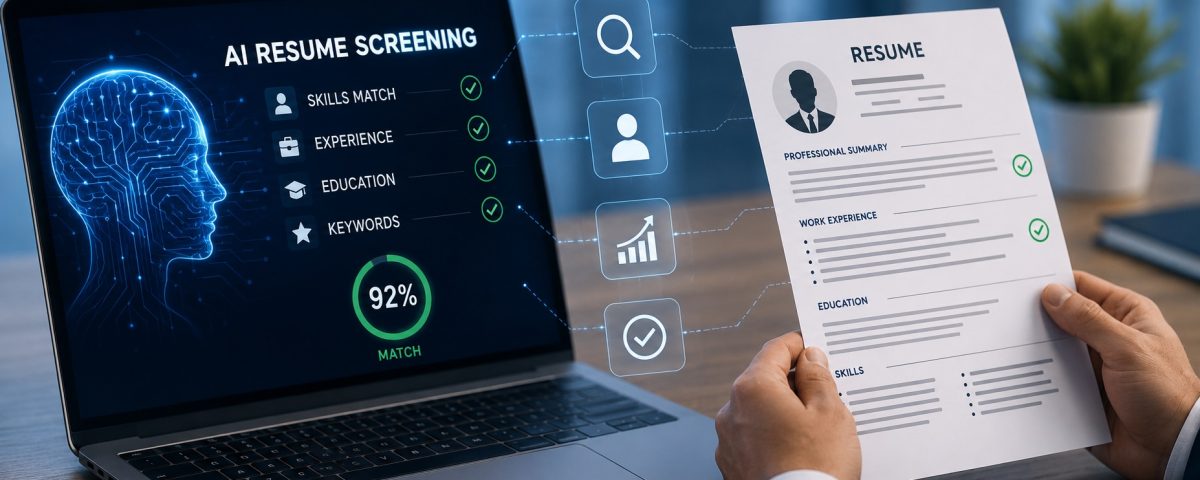
In today’s competitive job market, many companies use Artificial Intelligence (AI) and Applicant Tracking Systems (ATS) to screen resumes before they ever reach a recruiter. This means your resume has only a few seconds to make the right impression. If your resume isn’t optimized for AI Resume Screening Systems, it may never be seen by a hiring manager, regardless of your qualifications. That’s why investing in professional resume writing services can significantly improve your chances of getting shortlisted.
What Are AI Resume Screening Systems?
AI Resume Screening Systems are software tools that automatically analyze resumes to identify the most qualified candidates. These systems scan resumes for relevant keywords, skills, work experience, education, certifications, and formatting before ranking applicants based on how closely they match the job description.
Large organizations receive hundreds or even thousands of applications for a single role. AI helps recruiters save time by filtering out resumes that don’t meet specific criteria.
Why Do Resumes Get Rejected by AI?
Many qualified candidates are rejected because their resumes aren’t optimized for AI screening. Here are some common reasons:
Missing relevant keywords
Using complex graphics, tables, or images
Generic resume for every job application
Poor formatting
Missing measurable achievements
Unclear job titles
Incorrect file format
The good news is that these issues are easy to fix with the right strategy.
1. Customize Your Resume for Every Job
One of the biggest mistakes job seekers make is sending the same resume to every employer.
Carefully read the job description and identify important keywords such as:
Required skills
Software knowledge
Certifications
Industry terminology
Job title
Naturally include these keywords throughout your resume without keyword stuffing.
For example, if the job description mentions “Project Management,” “Agile,” and “Stakeholder Management,” ensure these terms appear where applicable in your experience.
2. Use an ATS-Friendly Resume Format
AI systems prefer clean, simple formatting.
Follow these best practices:
Use standard fonts like Arial, Calibri, or Times New Roman.
Keep font size between 10 and 12 points.
Use clear section headings.
Avoid tables, graphics, text boxes, and icons.
Use bullet points.
Save your resume as PDF or Word if requested.
Simple formatting ensures AI can accurately read every section.
3. Include Relevant Keywords Naturally
Keywords are the foundation of AI resume screening.
Focus on:
Technical skills
Soft skills
Industry certifications
Software tools
Job titles
Professional qualifications
Instead of simply listing skills, demonstrate them in your work experience.
Example:
Instead of:
Leadership
Communication
Write:
Led a team of 12 employees, improving project completion by 25%.
Collaborated with cross-functional teams to deliver projects ahead of schedule.
This approach satisfies both AI systems and human recruiters.
4. Highlight Measurable Achievements
AI increasingly recognizes resumes with quantifiable results.
Rather than writing:
“Responsible for sales.”
Write:
“Increased annual sales by 32% through strategic client acquisition.”
Numbers make your accomplishments more credible and impactful.
Include:
Revenue growth
Cost savings
Team size
Customer satisfaction
Productivity improvements
Project completion rates
5. Use Standard Section Headings
Avoid creative headings such as:
My Journey
Career Story
Professional Highlights
Instead use standard ATS-recognized headings:
Professional Summary
Work Experience
Education
Skills
Certifications
Projects
Awards
AI systems easily recognize these sections.
6. Write a Strong Professional Summary
Your professional summary should immediately communicate your value.
Include:
Years of experience
Industry
Core expertise
Key achievements
Career objective
Example:
“Experienced Digital Marketing Specialist with 6+ years of expertise in SEO, PPC, content marketing, and analytics. Successfully increased organic traffic by 120% while managing multi-channel campaigns.”
This gives AI and recruiters immediate context.
7. Avoid Keyword Stuffing
Many candidates try to fool AI by repeating keywords multiple times.
Modern AI systems recognize unnatural repetition and may lower your ranking.
Instead:
Use keywords where relevant.
Keep your writing natural.
Focus on achievements rather than keyword lists.
8. Match Your Skills with the Job Description
Create a dedicated Skills section that reflects the employer’s requirements.
Example:
Technical Skills
Microsoft Excel
Power BI
SQL
Python
Tableau
SAP
Only include skills you genuinely possess.
9. Proofread Carefully
Even small spelling mistakes can affect AI matching.
Double-check:
Grammar
Spelling
Dates
Job titles
Company names
A polished resume creates a stronger first impression.
10. Get Professional Resume Writing Services
Many job seekers struggle to optimize their resumes for modern AI systems.
Professional resume writers understand:
ATS optimization
Industry-specific keywords
Resume formatting
Executive summaries
Achievement-focused writing
A professionally written resume significantly improves your chances of passing AI screening and securing interview calls.
Read more: Resume Writing Services for Executive Professionals | Resume writing services in Lucknow
Final Thoughts
AI Resume Screening Systems are now an essential part of the recruitment process. Rather than trying to beat the system with shortcuts, focus on creating a resume that accurately reflects your skills, experience, and achievements while following ATS best practices. Tailor your resume for each job, use relevant keywords naturally, keep the formatting simple, and highlight measurable accomplishments. By combining these strategies with expert resume writing services, you can improve your visibility, increase your ATS score, and maximize your chances of landing interviews in today’s competitive hiring landscape.